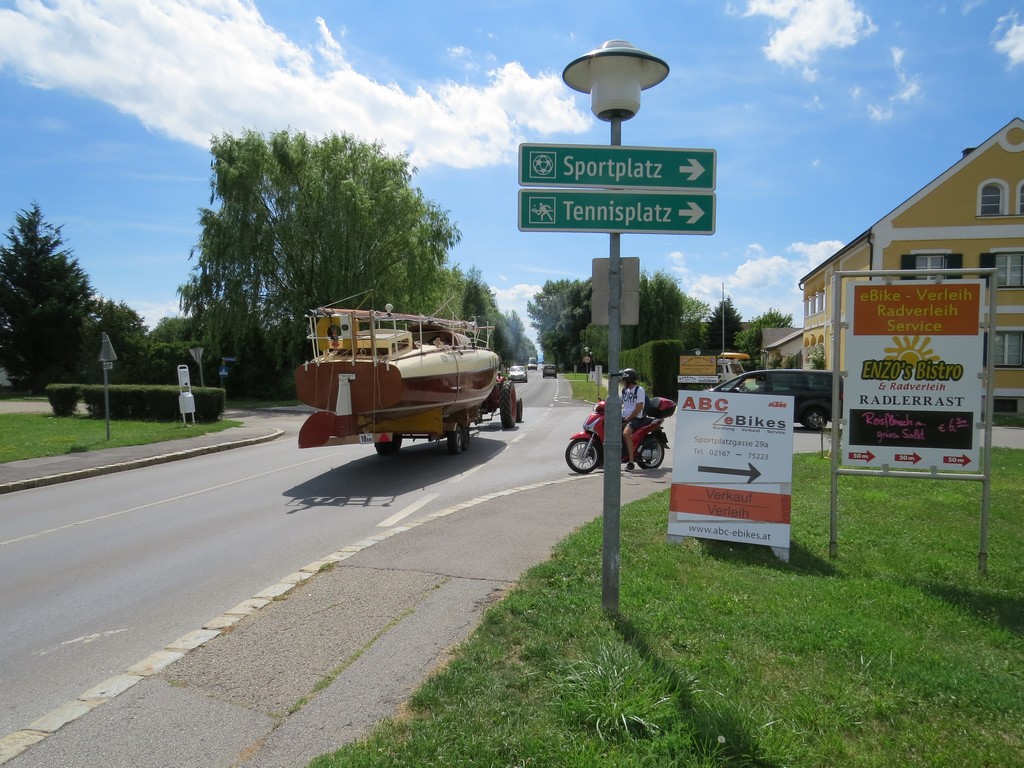
Monday, 9 March 2009

Luders L-16

A recent thread in the Atalanta Owners Association forum concerning WW2 airborne lifeboats led me to research a little deeper. Uffa Fox and Fairey Aviation developed a technique that was later adapted by Fairey Marine in the construction of their boats including the Atalanta 26. The Us adapted the same technique in the design of the A12 Airborne Lifeboat which was used successfully during WW2 in the Pacific. The following photo comes from InTheBoatShed, searched under “airborne”

An article in Wooden Boat Magazine issue 177:46 described a very pretty knockabout called The Luders L-16 which was built using the same construction techniques and the L-16 homepage gives the following brief history.

The Luders 16 Story

In the early nineteen thirties, the Fishers Island Yacht Club was casting about for a class to use for the junior sailors. A. E. Luders, Sr. and Jr. were chosen to design and build this new one-design class. The "Luders Gang" was well known as active racers and innovative designers of racing boats (they even went on to design several America's Cup contenders). The Luders decided that rather than produce a "chunky little boat" similar to many others used by juniors, they would design a miniature version of the then modern International Rule Sloop (such as the Six Meter). About fifteen L16s were built in 1934, and they were raced at Fishers Island until a hurricane decimated the fleet later in the decade. The surviving boats scattered, but interest in the class grew as more and more people saw the sleek little boats.


During World War II, Luders Marine Construction Company began building "molded plywood" life rafts to be dropped from airplanes to downed pilots in the water. This was a new technology using wood veneers and large autoclaves to cure the glue, producing a "monocoque" hull identical in construction to some aircraft such as the famous "Spruce Goose". In 1944, as the war was winding down, Luders began looking for post-war uses for these autoclaves and decided to adapt the L16 design to this new high-tech building process. Thus, the new "hot-molded" L16 Class was born! The L16s were built with five 1/8" thick mahogany veneers. The boats are 26'4" long, 16'4" at the waterline, they have a 5'9" beam, a 4' draft, displace 3,200 lb, and utilize a two-thirds fractional rig with main, 180% genoa, and a spinnaker.


There are often periods of doubt in my restoration of Salizanda. In the blogspot Knockaboutsloops, there are some pictures of the beautifully restored Luders L-16 “Fiona” which provide me with the strength to continue.


Sunday, 1 March 2009

Motor and Electrics

I discovered all I know about electrics at the age of seven when I stuck my finger in the back of a tube radio. However, local regulations for our local sailing area along with many other local authorities for inland waters in Europe, prohibit IC motors. So I was faced with the reality of pulling the diesel motor and installing an electric propulsion system.


I work on a very tight budget so having an engineer install a system for me or even buying a turnkey system was out of question. If I had had access to broadband and the profusion of technical forums that followed before starting on this project I would have saved myself a great deal of pain and money. So by the time I discovered groups like the electric boat forum I had already made many mistakes and amassed a collection of unusable junk.


My present system comprises of the following components;

6- 12v. 105 AH Marathon M12v105 FT. Lead-acid batteries from Exide. connected in two parallel banks of three connected in series giving me 300 ah at 24v.

Curtis 1205 controller with Albright SW80 main contactor and SW182 changeover contactor, controlled by Curtis ET-103M(marine) 1-5v Electronic throttle

2:1 Kw running 2600 rpm at 24v series wound industrial motor driving the existing 11 x 9 inch RH prop through multiple v-belts at a 2:1 reduction. I could run this up to 48v but decided on 24v because of the availability of components.


I want to spend as little as possible on this system as I consider it a test bed for future development.


There is still an enormous amount of work to be done before I can test the system in the water but I am even at this stage, a convert to electric propulsion. The environmental benefits are now clear to most people but the availability of full torque at min. rpm makes manoeuvring at close quarters much easier. Anybody with experience of trying to manoeuvre into a tight berth with boats for and aft and wind and tide will know what I am saying.


The main disadvantage is energy storage (batteries) but our economic recession will spur rapid development of new battery systems, LiPo4 or others necessary for the new generation of transportation. The development of fuel cells and the ability to rapidly recharge batteries coupled with other developments will quickly usher in a new age of transportation both on land and water.

Tuesday, 17 February 2009

The Cockpit. Part 2

The final design of the cockpit was controlled by a number of factors.

The Atalanta rudder is controlled by cables running over sheaves around the aft cabin, leading to a bearing shaft through the aft cockpit bulkhead to a whipstaff tiller. The bearing, of course, was seized. Faced with machining a new bearing I looked at alternatives and decided that with the centre cockpit my logical choice was hydraulic wheel steering. I have hands on experience with most systems and concluded that, even with the limitations, it was the way for me to go.


The diesel motor had to go, even though it had just been rebuilt. Local regulations prohibit IC motors on all but service vessels on many recreational inland waters in Europe. So it’s sails, oars or an electric motor. Even the luxury of a hybrid, that is a diesel with an electric motor, is denied. The installation of an electric motor and a large battery bank changed the design criteria of the engine room space and the cockpit. Access to the sensitive electrics and electronic controls was required from the aft cabin while access from the cockpit sole was substantially reduced.


I have always liked bridge decks. It makes a smaller target for rogue seas, creates a comfortable seating arrangement and working space as well as usable space below decks. So, to me, they appeared to be a logical progression following the changes required by the engine refit.


There is never enough storage space in the cockpit and as I considered the pilot berth under the chart table and starboard cockpit seat impractical, I decided to build port and starboard cockpit lockers. I have designed them to be watertight. I hope they remain so. The working surfaces which are the lighter coloured areas will be finished at the end of the project with 6mm teak decking caulked with sikaflex


I had many misgivings about diverging from the original design and feel that there are many who will disagree with my decisions but I like and stand up for what I have done and had lots of fun building it.

Saturday, 14 February 2009

Keel Structure Repair

It has been said of the Atalanta, that it is an engineers design which is not surprising as Fairey Marine, the builders, built and designed wood framed aircraft before and during WW2. One of the more famous being the Swordfish torpedo bomber
The main structural element consists of a main bulkhead on which the mast is stepped and two 480 lbs pivoting ballast keels are hung. The keels are positioned either side of the accommodation which leaves it free of the usual obtrusive centerboard casing. They are cantilevered out from massive steel brackets which are bolted through the main bulkhead.


This wonderful piece of engineering had been sadly neglected on Salizanda and refused all means of persuasion to come apart. As it was essential that the keels be lowered out of the boat, the resulting work caused extensive damage to the keel casings, necessitating an extensive rebuild to both the keel support system and the keel casings. This was definitely not part of the plan.